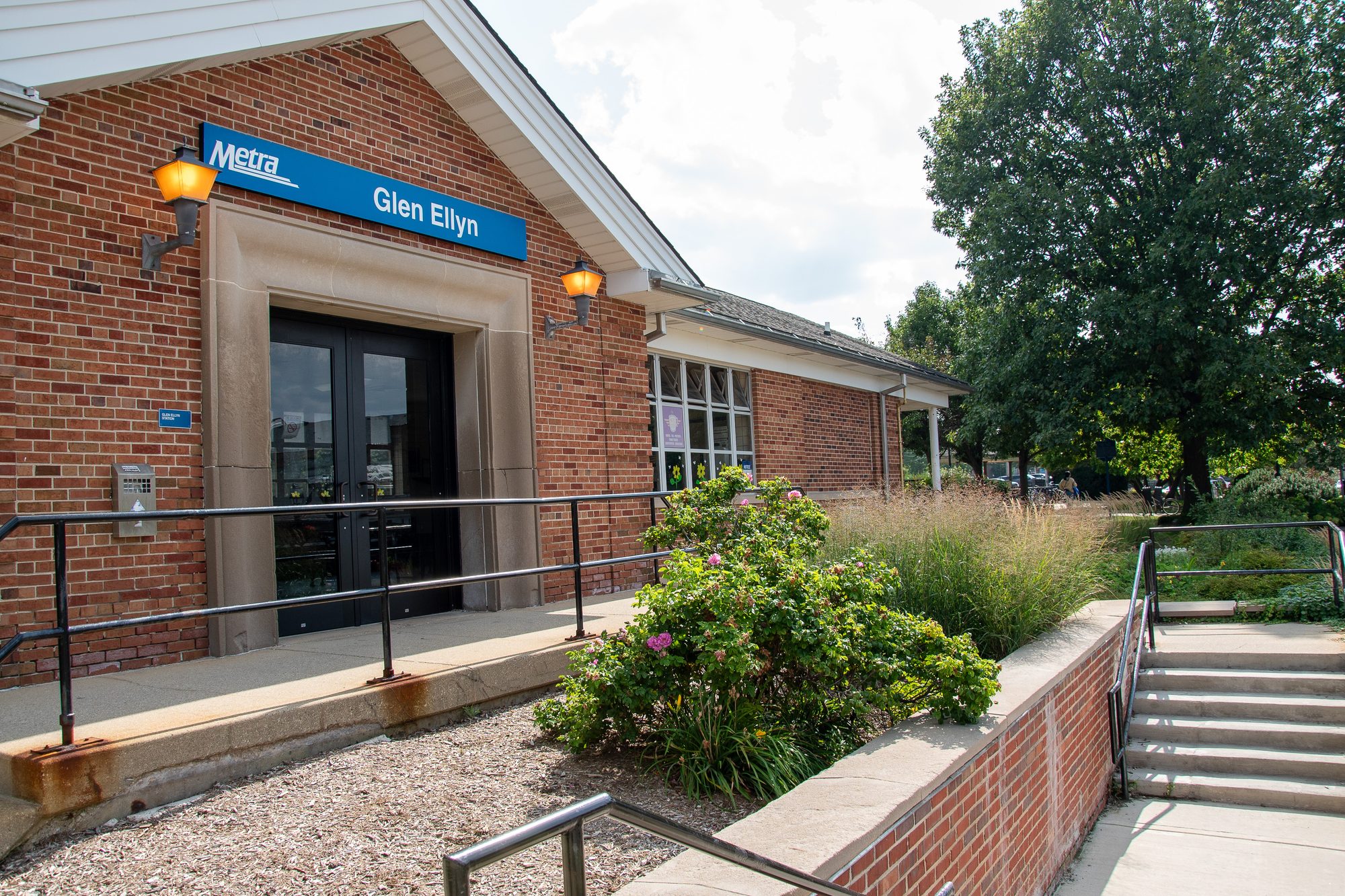
Glen Ellyn and Lombard commuters could see Metra trains running every 30 to 60 minutes, all day, under a draft plan the agency released Thursday, Oct. 29.
The draft Systemwide Network Plan lays out a two-phase path to transform Metra's 11 commuter rail lines into a regional rail network. Both towns are served by the Union Pacific West line, which the plan targets for a simplified pattern of local and express stops under the first phase.
The price tag is steep. Metra estimates the first phase, called Regional Rail 1.0, would cost $2.7 billion in capital spending and $269 million in additional operating costs across the system. A second phase pushing service to every 15 to 30 minutes would add $6.4 billion in capital costs and $411 million more in operating costs.
"This plan lays out near- and mid-term implementation steps to support the evolution of our service, but it also defines a long-term vision for what regional rail can become," Metra CEO Jim Derwinski said in the agency's announcement.
What changes for UP-W riders
Under Regional Rail 1.0, lines like the BNSF and Union Pacific West would see a simplified pattern of local and express stops rather than the inner-zone/outer-zone split planned for four other lines, according to Trains magazine. The report says that pattern is "better aligned with where the ridership potential is" on those corridors.
Glen Ellyn's station already ranks among Metra's busiest. Before the pandemic, it was the second-busiest stop on the UP-W line and ninth-busiest among Metra's 233 non-downtown Chicago stations, according to the Village of Glen Ellyn. The village is separately moving ahead with a $54.5 million station rebuild, with construction anticipated as soon as fall 2027.
The first phase would require $380 million for additional equipment, $360 million for signals and sidings, and $140 million for facilities allowing trains to turn mid-route, according to Trains. Another $1.8 billion would go toward major projects such as the Rock Island Intercity improvements.
Funding remains uncertain
The Chicago Sun-Times reported that much of the extra $1.5 billion coming from the Northern Illinois Transit Authority (NITA) Act will cover daily operations, not new infrastructure. Federal funding has also slowed. The Sun-Times noted the $9 billion total price tag is 18 times greater than the $500 million Metra budgeted this year for infrastructure and trains.
The report was developed with "limited initial coordination with freight railroads," according to Trains. Metra does not own many of its rail lines and must negotiate with freight carriers, the Sun-Times reported.
Still, Metra has already taken small steps. The agency increased weekend trains on the BNSF and UP-North lines and saw a 30 to 40 percent ridership bump during those times, according to the Sun-Times.
How to weigh in
Metra is accepting public feedback on the draft plan through Dec. 14. A virtual public meeting is scheduled for 7 p.m. Monday, Nov. 16. The Zoom link will be posted at metra.com/SNP by Friday, Nov. 13.