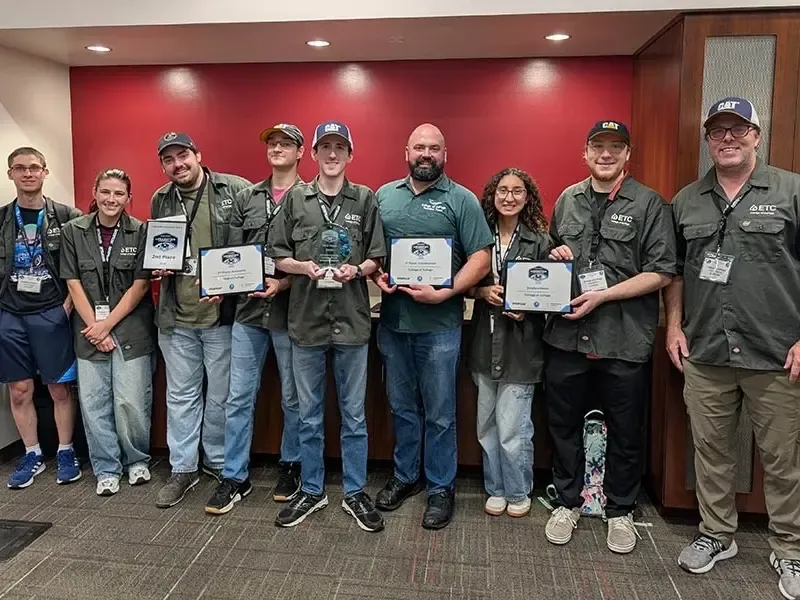
The College of DuPage robotics team won the 2026 NASA International Lunabotics Championship, finishing first in a seven-team international field after a competition held Oct. 26 through Oct. 29 in Florida.
COD was the only community college among the seven participating institutions, according to a COD Newsroom report published by Patch. The Glen Ellyn school was also one of just two U.S. colleges selected to compete. Teams came from the United States, United Kingdom, India and Australia.
The teams used student-designed lunar construction robots at the University of Central Florida in Orlando and the Exolith Lab in Oviedo, Florida. Each team got two 25-minute runs in a simulated lunar environment. Judges scored them on berm construction, robot mass, energy efficiency, dust tolerance and autonomous operation.
The COD team finished day one in first place.
Then the robot's mini PC failed. With two hours left before the final inspection on day two, team members bought a replacement computer and configured it to run the robot. They completed their final run and held their lead to win the championship.
"They have accomplished something truly special, and I hope they take a moment to appreciate just how remarkable this achievement is," said Eric Meloche, associate professor of physics at COD and the team's faculty advisor.
The win capped a strong year for the program. COD earned its invitation to the international competition after finishing first in the Lunabotics Construction category at NASA's 2026 Lunabotics Challenge in May. That earlier domestic competition drew 47 teams to a qualifying round, with the top 10 advancing to finals held May 19 through May 21 at Kennedy Space Center.
Andrew Ebert, a mechanical engineering student at COD, was quoted on NASA's website after the May competition. "I think it's everyone's dream to come work at NASA," Ebert said. "It's always pushing the boundaries of what has ever been done by humans."
Before the October championship, team member Zachary Vollman described the robot's design in a COD news release. "Our robot is basically a frame with a bucket that's centered on the frame," Vollman said. "What it does to dig is it lowers the bucket using a vibration motor to vibrate the lunar regolith into the bucket."
The robot lifts the collected material, drives to a depositing zone and dumps it through the rear, Vollman said. Before the international competition, Meloche said COD competes against some of the best engineering programs in the country, many from large four-year universities with greater resources.