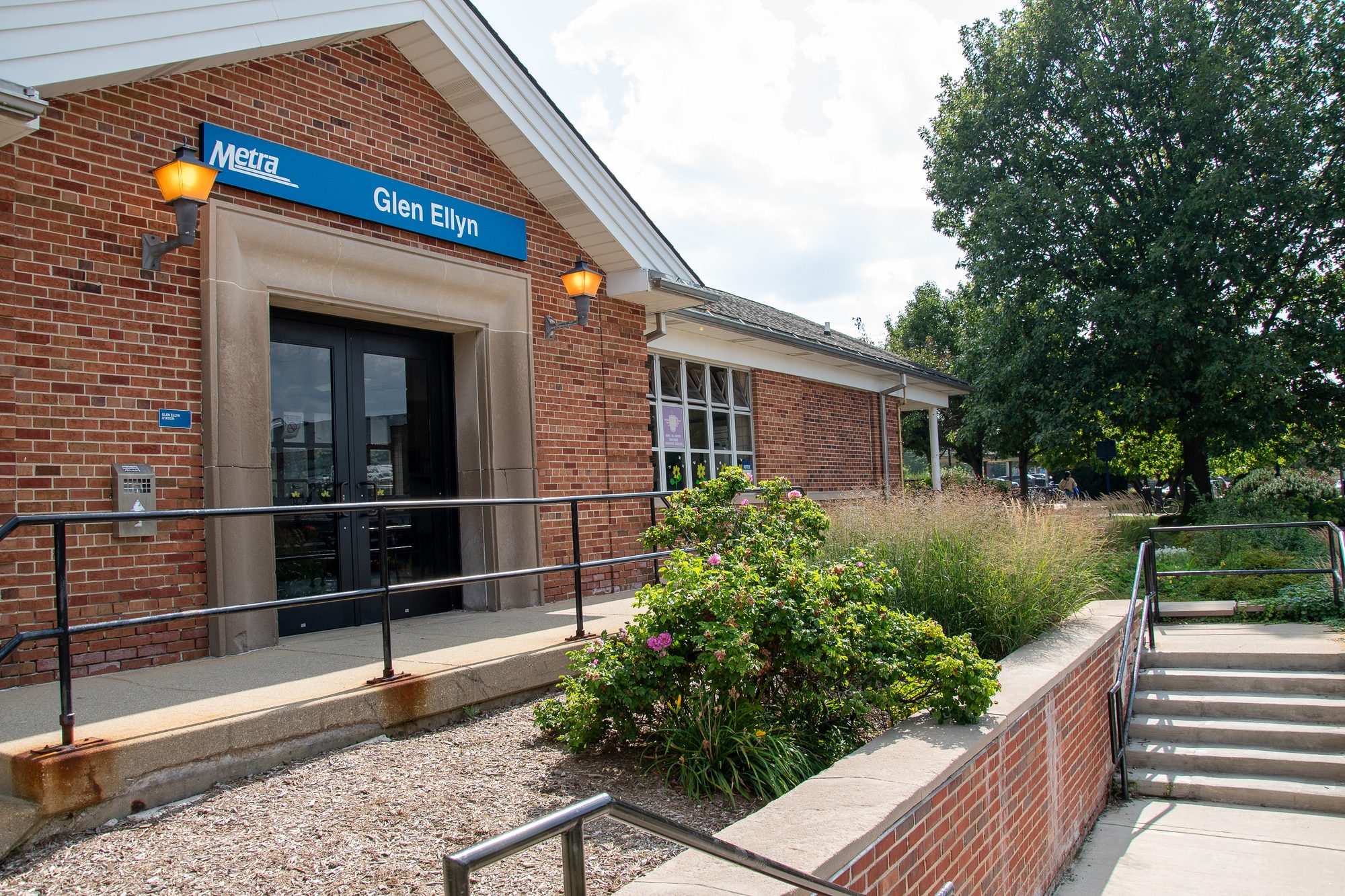
Glen Ellyn commuters could see trains running every 30 to 60 minutes under a draft plan Metra released in late October.
The agency's Systemwide Network Plan lays out what it would take to shift from a rush-hour-focused railroad to one offering frequent, all-day service in both directions throughout the week. The stakes are high locally: before the COVID-19 pandemic, Glen Ellyn ranked as the second-busiest station on Metra's Union Pacific West Line and the ninth-busiest among the agency's 233 non-downtown Chicago stations, according to the village of Glen Ellyn.
Metra will hold a virtual public meeting at 7 p.m. Monday, Nov. 16, to present the draft results. Riders and residents can review the full report and submit feedback online at Metra's project page.
Two tiers, billions in costs
The plan outlines two levels of service improvement. Regional Rail 1.0 would bring trains every 30 to 60 minutes across the system. Metra estimates that tier would cost $2.7 billion in capital spending and $269 million in additional operating costs.
Regional Rail 2.0 is more ambitious. It would push frequency to every 15 to 30 minutes but would require an additional $6.4 billion in capital costs and $411 million more in operating costs, according to Metra.
Because each line faces different challenges with infrastructure, freight traffic and ridership patterns, the plan does not propose a single service model. Some lines would run a pattern similar to the current schedule but more frequently. Others might split into inner and outer zones.
The NITA Act and Metra's strategic plan
Metra undertook the study in response to its strategic plan, which examined post-COVID ridership patterns and set a "regional rail" vision as a goal. The passage of the NITA Act also drives the transition. The act requires Metra to implement a regional rail pilot on the Rock Island Line by January 2027 and makes the shift to regional rail part of the service standards Metra must meet going forward.
"This plan lays out near- and mid-term implementation steps to support the evolution of our service, but it also defines a long-term vision for what regional rail can become," Metra Executive Director and CEO Jim Derwinski said in the agency's announcement.
NITA interim Executive Director Jamie Rhee said the authority looks forward to incorporating all service board efforts into a regional service planning framework beginning in 2027.
Early steps already underway
Metra said it has already taken smaller steps toward regional rail. The agency has standardized and simplified schedules, shortened headways during off-peak hours, improved service for reverse commuters and strengthened transfer connections. Lines that adopted more regional rail elements saw stronger ridership recovery, according to Metra.
The plan emphasizes solutions within Metra's existing footprint, largely avoiding costly new right-of-way or additional mainline capacity beyond current plans.
Feedback on the draft plan is open through Dec. 14 at Metra's project page.