Glen Ellyn residents who want to downsize, find an accessible home or rent an affordable apartment now have the village's formal attention. The 2026-2030 Strategic Plan, presented to the Village Board on Monday, Aug. 17, identifies five unmet housing needs and lays out 50 initiatives across infrastructure, economic development and village operations for the next five years.
Village President James Burket presided over the presentation, which was framed as a board discussion rather than a formal adoption vote.
The housing assessment built into the plan names specific gaps: downsizing and aging-in-place options, housing for people with disabilities, entry-level for-sale homes, workforce housing and housing for lower-income renters. Glen Ellyn's housing stock is 64% single-family detached, and the village has added nearly 1,000 households headed by someone 55 or older since 2010, according to a village zoning diagnostic report.
To address those gaps, the plan calls for reviewing developer incentives for affordable units, updating village codes to encourage diverse housing types and evaluating options for inclusive housing.
The housing issue is not new to the board. In December 2025, when trustees approved demolition of a Roosevelt Road hotel parcel for a 42-unit affordable housing development, then-Village President Mark Senak called the effort "not only transformational, it's generational," saying young adults who would otherwise be forced to move away would have a chance to stay in the community where they grew up.
Infrastructure priorities
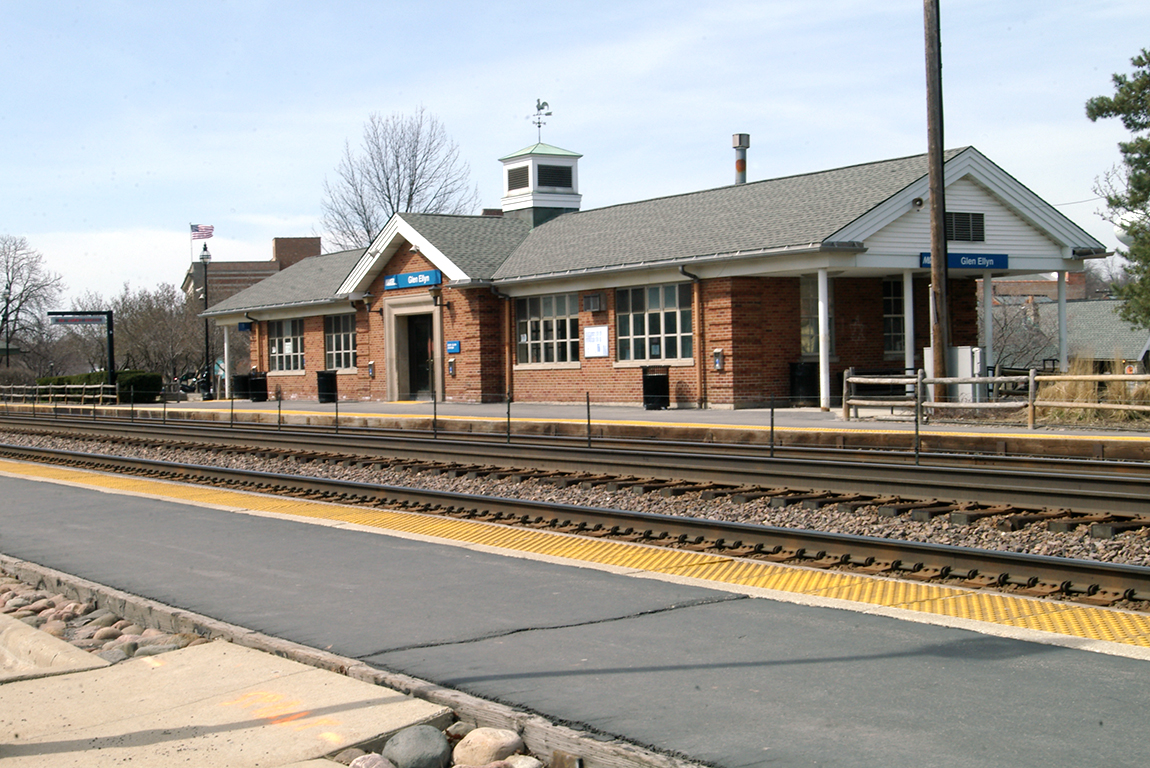
The plan designates the Train Station/Pedestrian Tunnel and Streetscape Phase 4 as a priority infrastructure project. The Comprehensive Plan calls for replacing the Metra station with a historically sensitive new building paired with an ADA-accessible pedestrian tunnel beneath the rail line near Forest Avenue.
The village had secured $24.8 million in outside grants for the project as of mid-2025: $14.4 million from the federal CMAQ program, $5 million from the Illinois Commerce Commission, $4 million from Metra and $1.4 million from the Surface Transportation Program. As of the third quarter of 2025, competitive bidding was targeting late 2026, with construction starting in early 2027 and lasting about two years. In March 2026, the project received all design exception signatures from IDOT, and staff sought an additional $2 million in federal community funding.
No total project cost appears in village documents reviewed.
The Roosevelt Road Master Plan is also listed as a priority project under the plan's Community and Economic Development goal, though no cost estimate or completion date appears in the document.
Broader goals
The plan is organized around five strategic goals: Workforce Excellence, Financial Resilience, Thriving Community, Community and Economic Development, and Proactive Infrastructure Management. It incorporates 74 of 79 actions from the village's 2023 Comprehensive Plan.
A community survey cited in the plan found 94% of residents feel safe, 88% rate utility infrastructure quality as important and 84% rate the village's overall economic health as good.
Other priority projects include a new zoning code targeted for completion by December 2026, a fire and EMS assessment beginning in August or September 2026, and a goal of increasing Village Links and Reserve 22 cash reserves by $300,000 to $500,000 annually.
What's next
Trustees were asked whether the plan identifies the right priorities, whether any initiatives are missing and whether any projects should be elevated. The plan describes itself as a living document with quarterly reporting to the board and community. Each initiative will include a department lead, target date and status updates tracked by the Village Board.